

Social Impact •
Is society engineered to be vulnerable?
From firmware in a charging cable to fridges, bank cards and bus routes: how sensible choices can leave us depending on systems we don't understand w…
Read more

Senior technologist working where data, AI, science, and social impact overlap. I trained as an astrophysicist, spent much of my career building teams and products around data, and I still love shiny things.

I've always been drawn to the messy, human side of technology. The kind that isn't about shiny features or perfect systems, but about real people, tough challenges, and figuring out what actually helps. Over the years that's meant building a refugee platform in a week, helping redesign how data works in children's social care, and developing tools that support people experiencing domestic abuse, all with a focus on tech that's ethical, grounded, and practical. My work tends to sit somewhere between public service, design, and data science, but what ties it together is this: I care more about outcomes than outputs, and about building things that are not just clever, but kind. Whether I'm working with government teams, charities, or global partners, the aim is the same: to make systems that serve people better, not just faster.

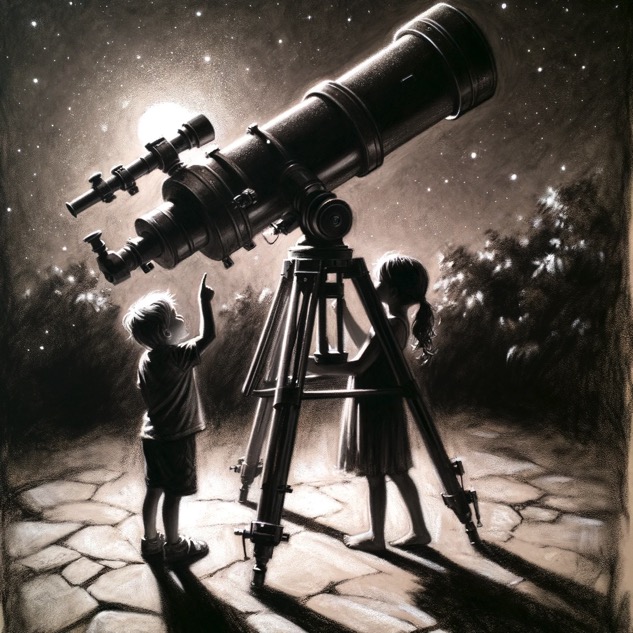
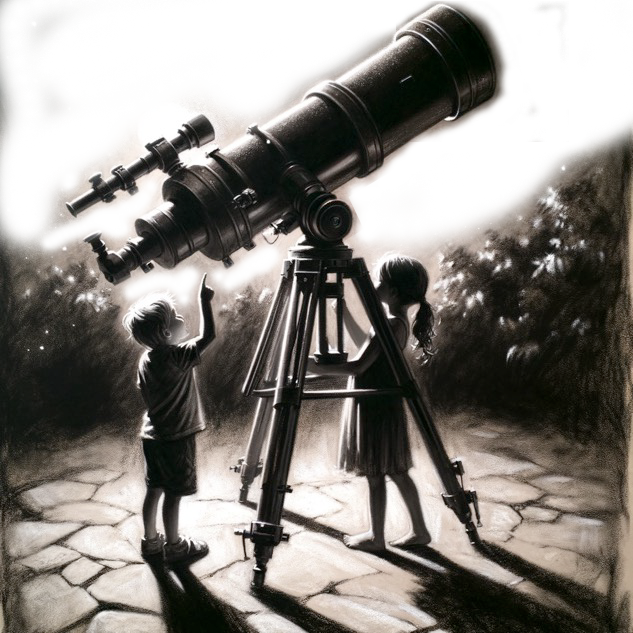
I never really managed to leave astronomy behind. These days that shows up through CERN festival work with The Big Bang Collective, talks and workshops that lean heavily on learning through play, and more recently Found in Space: a dedicated platform that turns open astronomical catalogues into interactive journeys, classroom material, and code you can inspect. It is where science, data, art, and a healthy amount of wonder get to share the same table.

I program for fun. And "occasionally" for work. But more importantly I find programming a great way both to explore concepts and ideas for myself, but also to teach logic and problem solving. Recently I met a high-school student who loves programming, but said he doesn't know if learning it properly is really worth it because AI will do it all in the future. My advice: of course you should learn it. Although jobs may change, the skills you learn will always be useful. And hopefully you'll have fun doing it. Programming isn't just about writing code, it's a creative process not dissimilar to creating a work of art, and the joy you feel at the end is the same. AI make take over the factory coding, but we will retain the joy of coding for creativity.
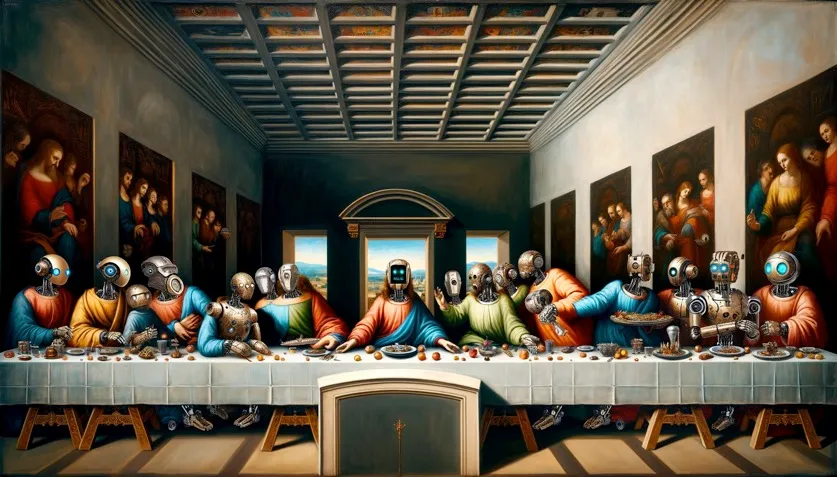
Digital art has fascinated me since the 8-bit computers and demoscene of the 1980s and 90s. I still enjoy exploring what new tools make possible. With AI, that curiosity comes with questions about creativity, the people whose work makes these systems possible, and what we choose to automate.
In Labour Reimagined, familiar paintings become a way into those questions. My travelling exhibition explores what automation could give us, what we risk losing, and our right to have a say in the future.
Thoughts, experiments, and explorations from my latest work and projects
From firmware in a charging cable to fridges, bank cards and bus routes: how sensible choices can leave us depending on systems we don't understand w…

How independent safeguards, feedback and accountability can help prevent bad decisions becoming harmful outcomes—in AI, public services and governmen…

I'm in Austin, Texas this week with the Big Bang Collective to host the Quantum Corral at Luck Reunion — more on that soon. Last night we had a lovel…

Earlier this week I spent a day at the UCL Knowledge Lab arguing - very productively - about power, epistemology, and whether a room full of research…
