Kaj SiebertMain website Labour Reimagined
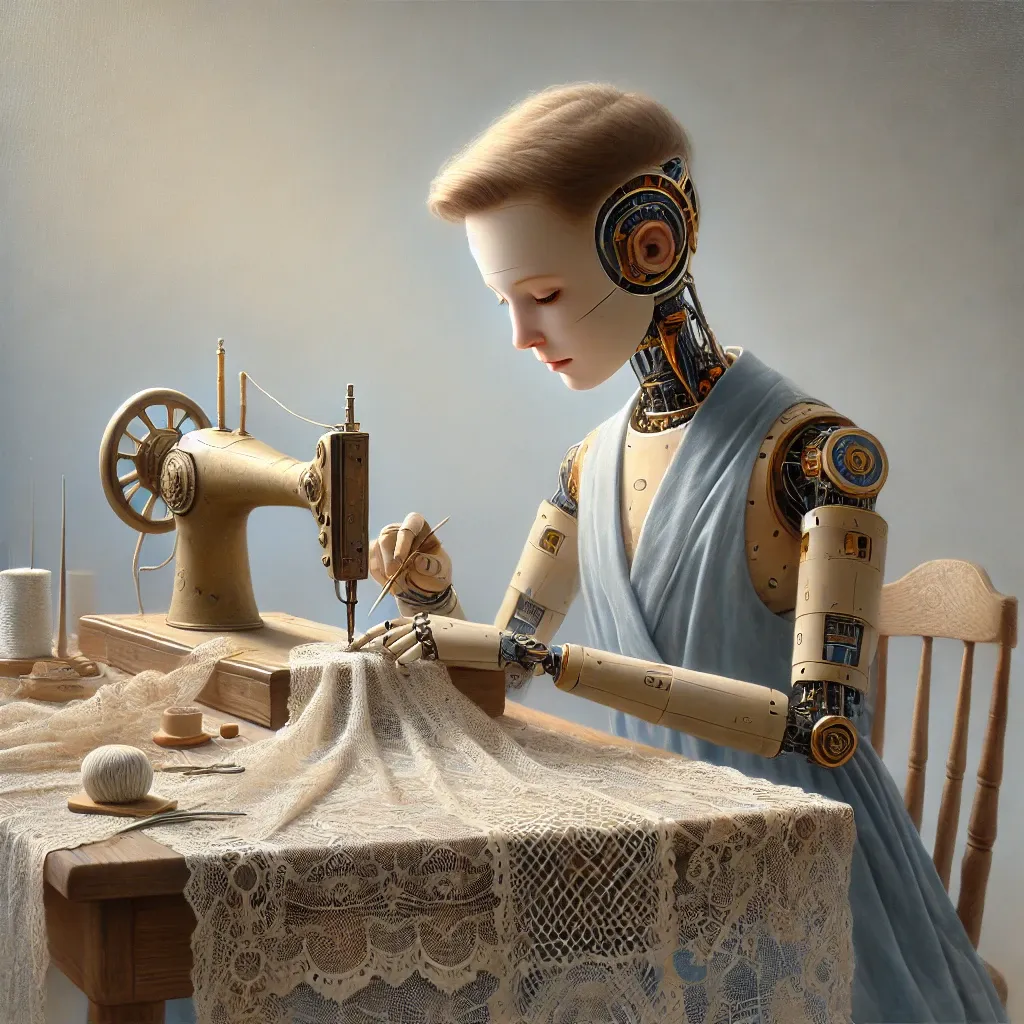
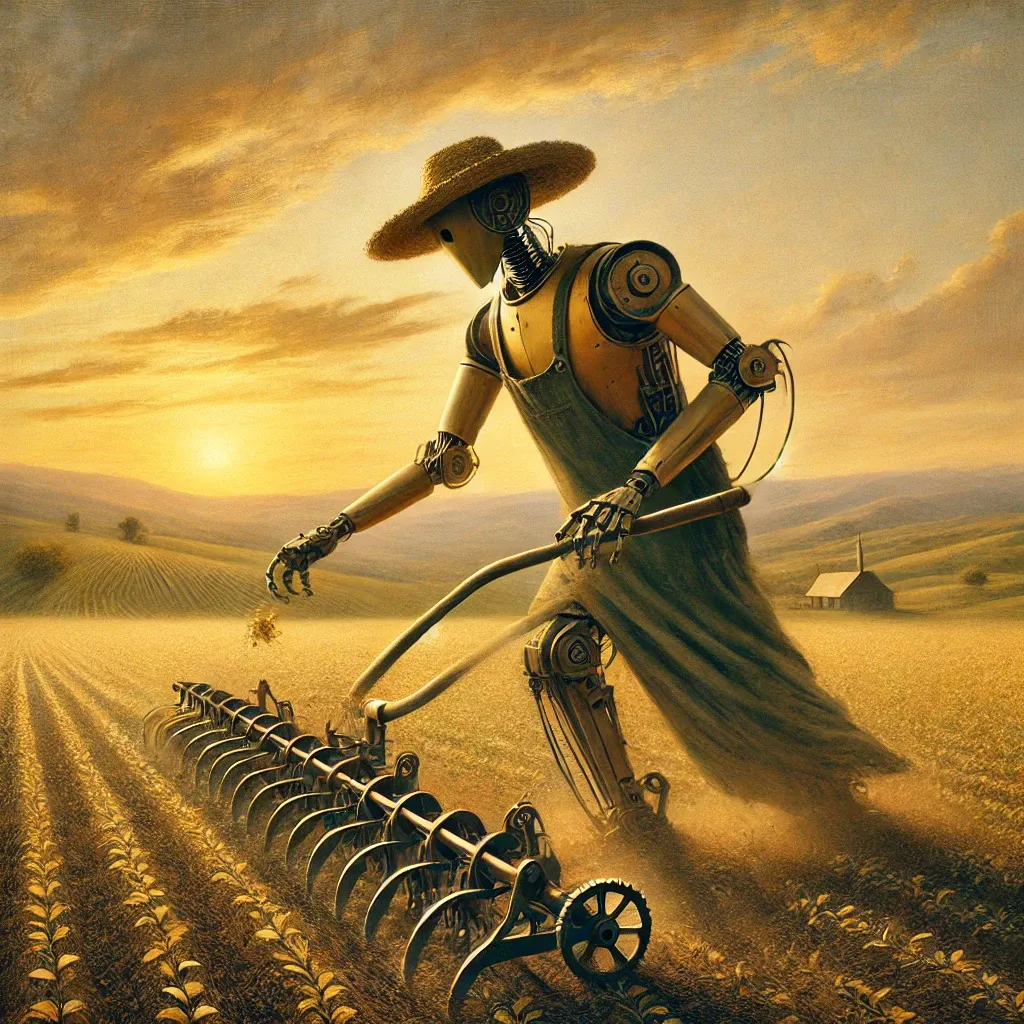
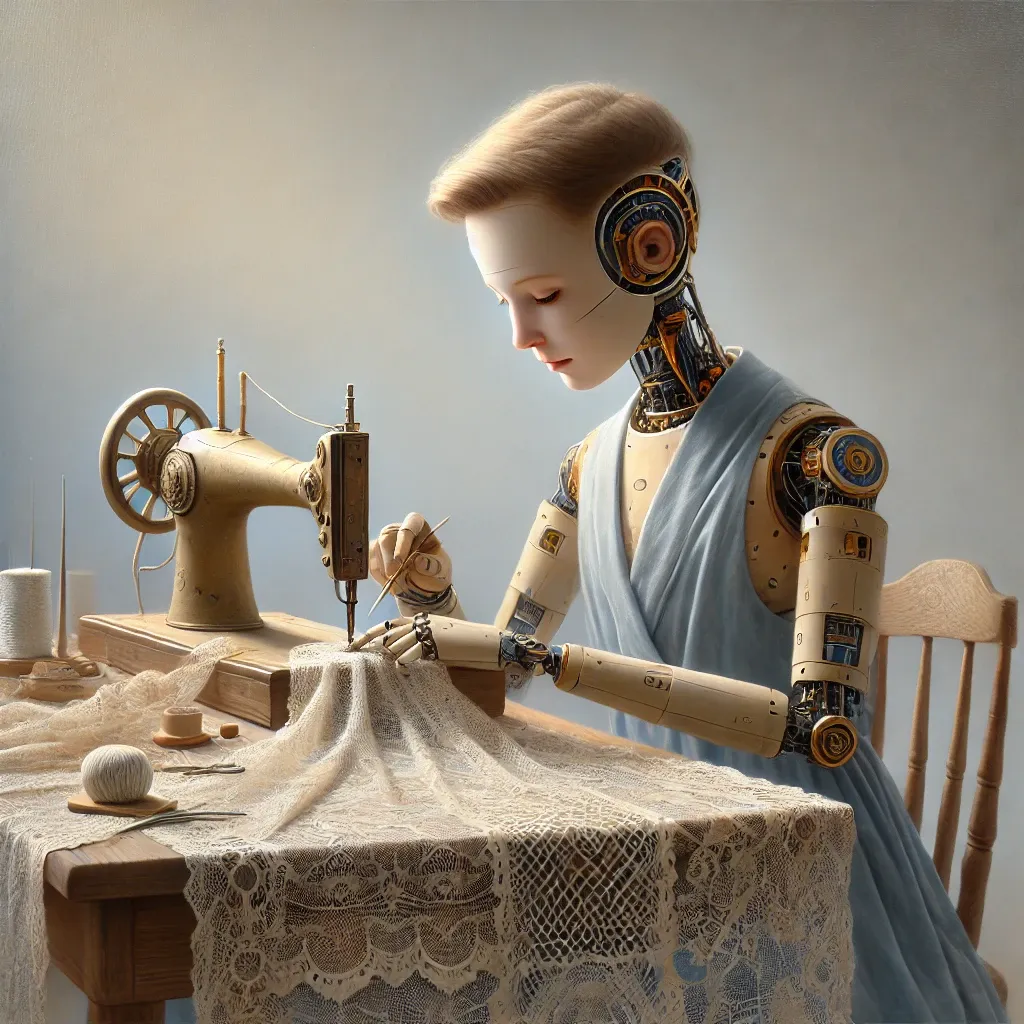
A brass-coloured robot bends over a sewing machine in a softly lit room, with fabric and thread on the table.
DALL·E 3 · 2024 The Lacemaker After Johannes Vermeer
View artwork

A travelling exhibition by Kaj Siebert

Labour
Reimagined

From hand to automation.

What do we want machines
to do for us?

Enter the story

Eight questions about work, art and our future.

01 / 08 — The choice

What do we want machines to do for us?

A woman bends over a piece of lace, absorbed in what she is doing. Now put a robot in her chair. Have we freed someone from a tedious task, or taken away something she wanted to do?

Vermeer’s The Lacemaker shows a woman of high social standing engaged in domestic work, according to the Louvre. The value of her activity needn’t be measured in wages. There is also the pleasure of making something well.

And the AI has quietly swapped her bobbin lace for a sewing machine. It has changed the task as well as the person doing it. I made this exhibition to explore choices like that: what we want help with, and what we might lose along the way.
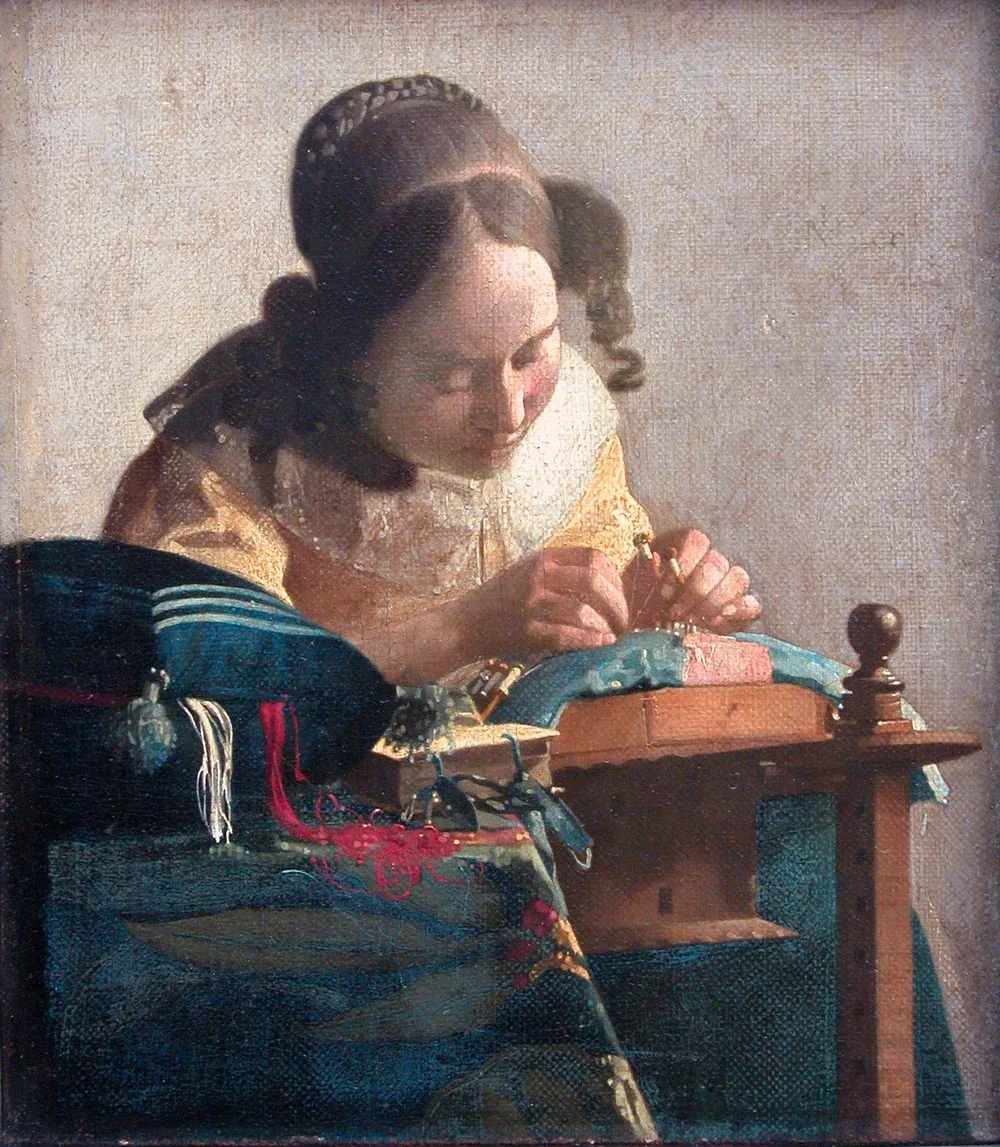
A woman in a yellow dress concentrates on making bobbin lace, her hands close to the threads.
The original The Lacemaker · c. 1669–70 Public domain · PD-Art

What would you gladly hand over? What would you want to keep?

The robots are a visual metaphor for automation. These imagined scenes are not demonstrations of what today’s machines can do.
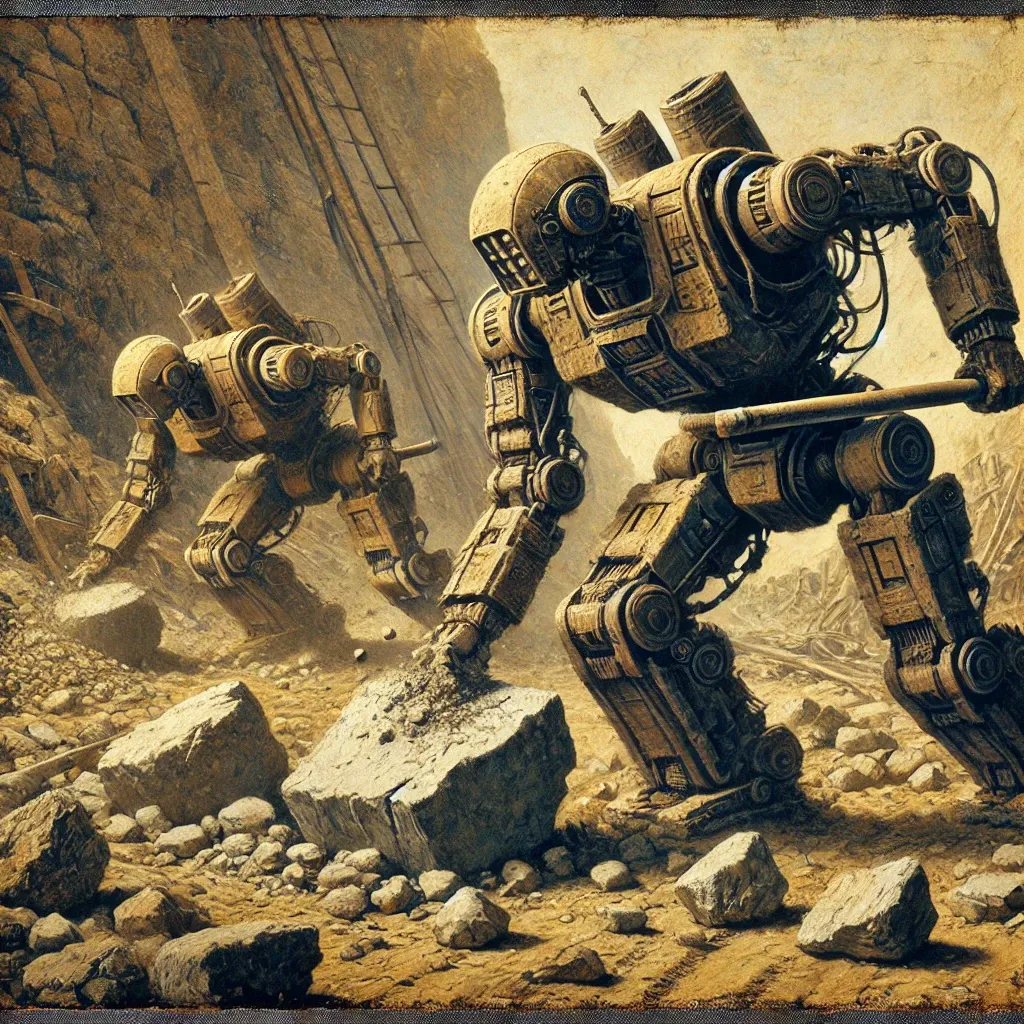
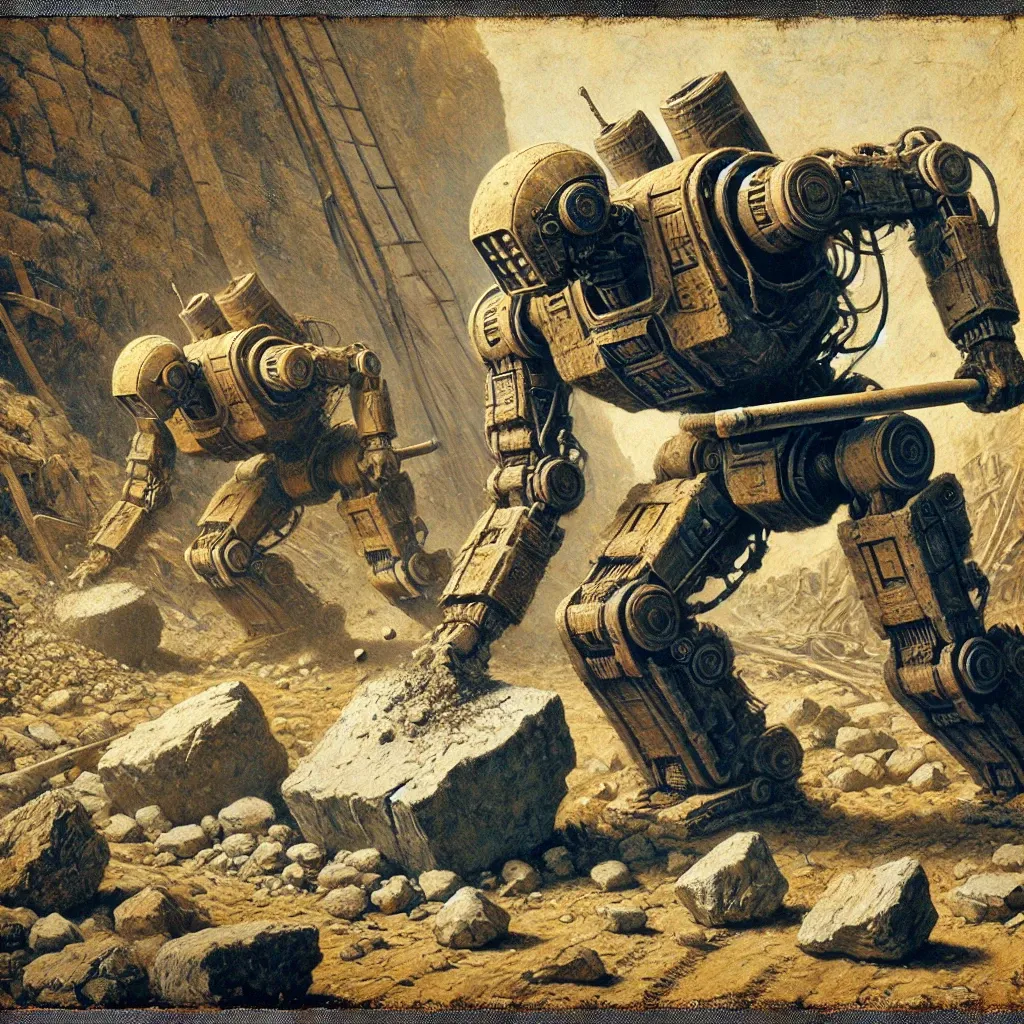
Two weathered robots break and gather stones beside a road, surrounded by rubble and a dark hillside.
DALL·E 3 · 2024 The Stone Breakers After Gustave Courbet
View artwork

02 / 08 — Less toil

There is dignity in people. Must there be dignity in toil?

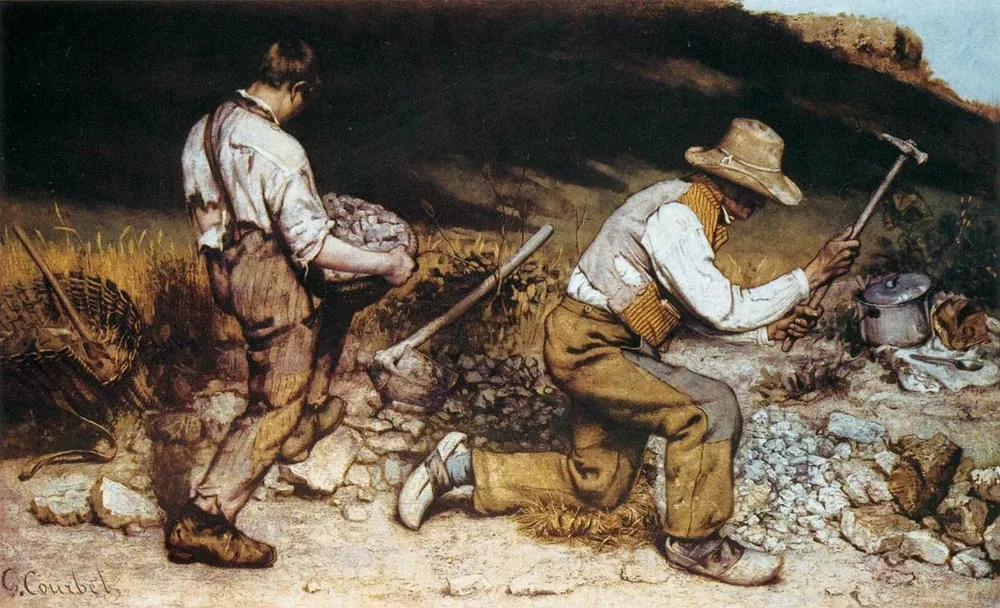
Courbet gave two ordinary road workers the scale and attention usually reserved for grander subjects. Their worn clothes, bent backs and heavy tools make the effort hard to miss. Painted in 1849, The Stone Breakers was destroyed in 1945; we know it through reproductions.

I wouldn’t want to preserve this way of working. A machine that spared those labourers years of pain would be welcome. We can respect the people doing the job without preserving the difficulty.

But they still need an income. If the machine saves someone’s back and costs them their livelihood, we’ve only solved part of their problem. I’d want the shorter working day to be something they could afford to enjoy.

Two labourers, one kneeling with a hammer and one carrying stones, work beside a road in worn clothes.
The original The Stone Breakers · 1849 · original destroyed in 1945 Public domain · PD-Art

If we remove the toil, how do we keep the security?

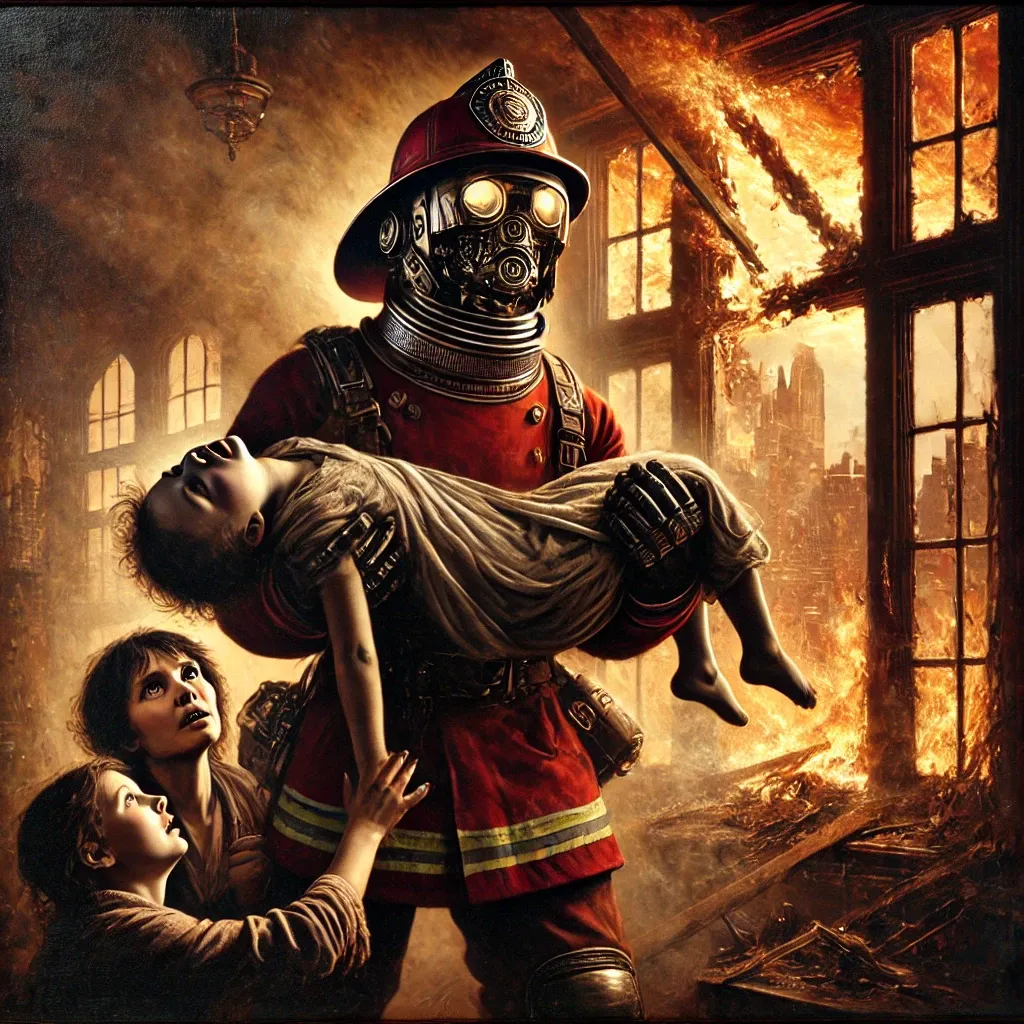
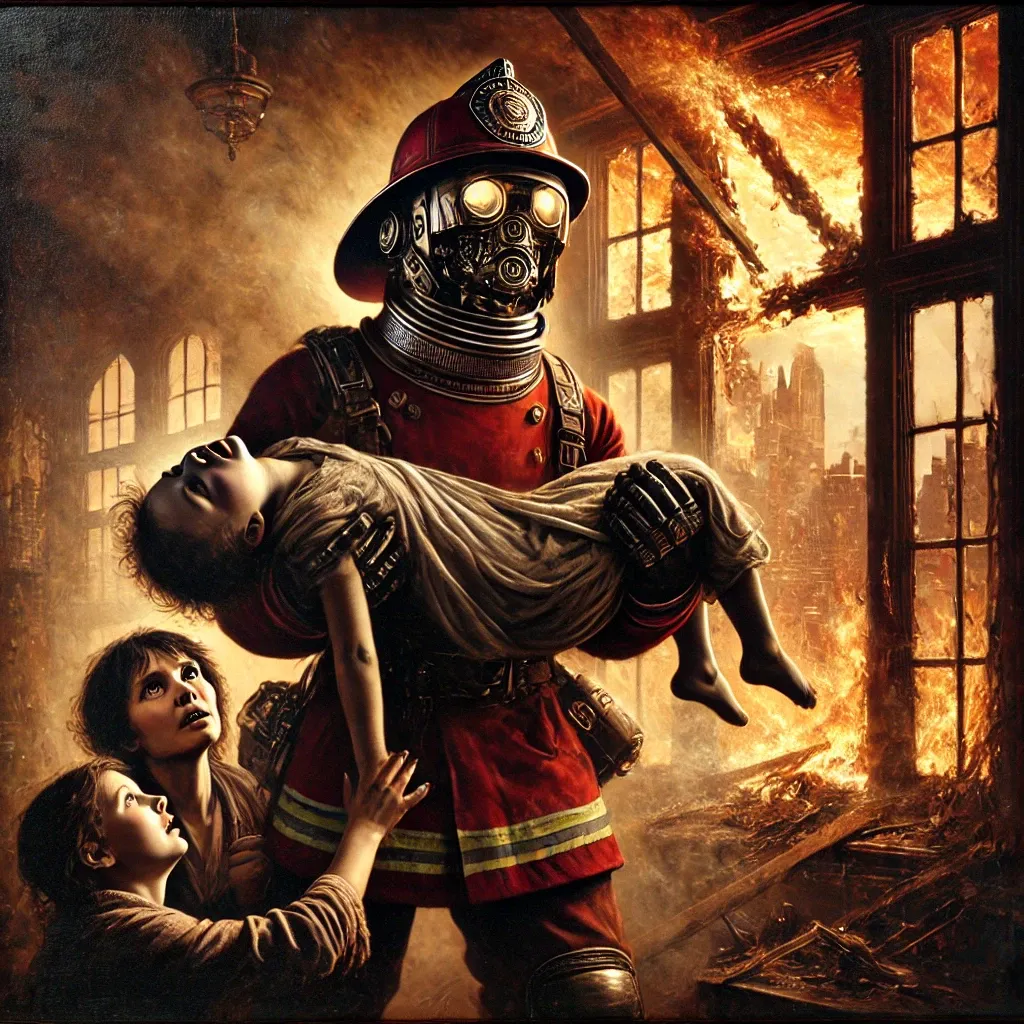
A robot in firefighter clothing carries children through the flames and smoke of a burning building.
DALL·E 3 · 2024 The Rescue After John Everett Millais
View artwork

03 / 08 — Out of danger

Some work, we would gladly give away.

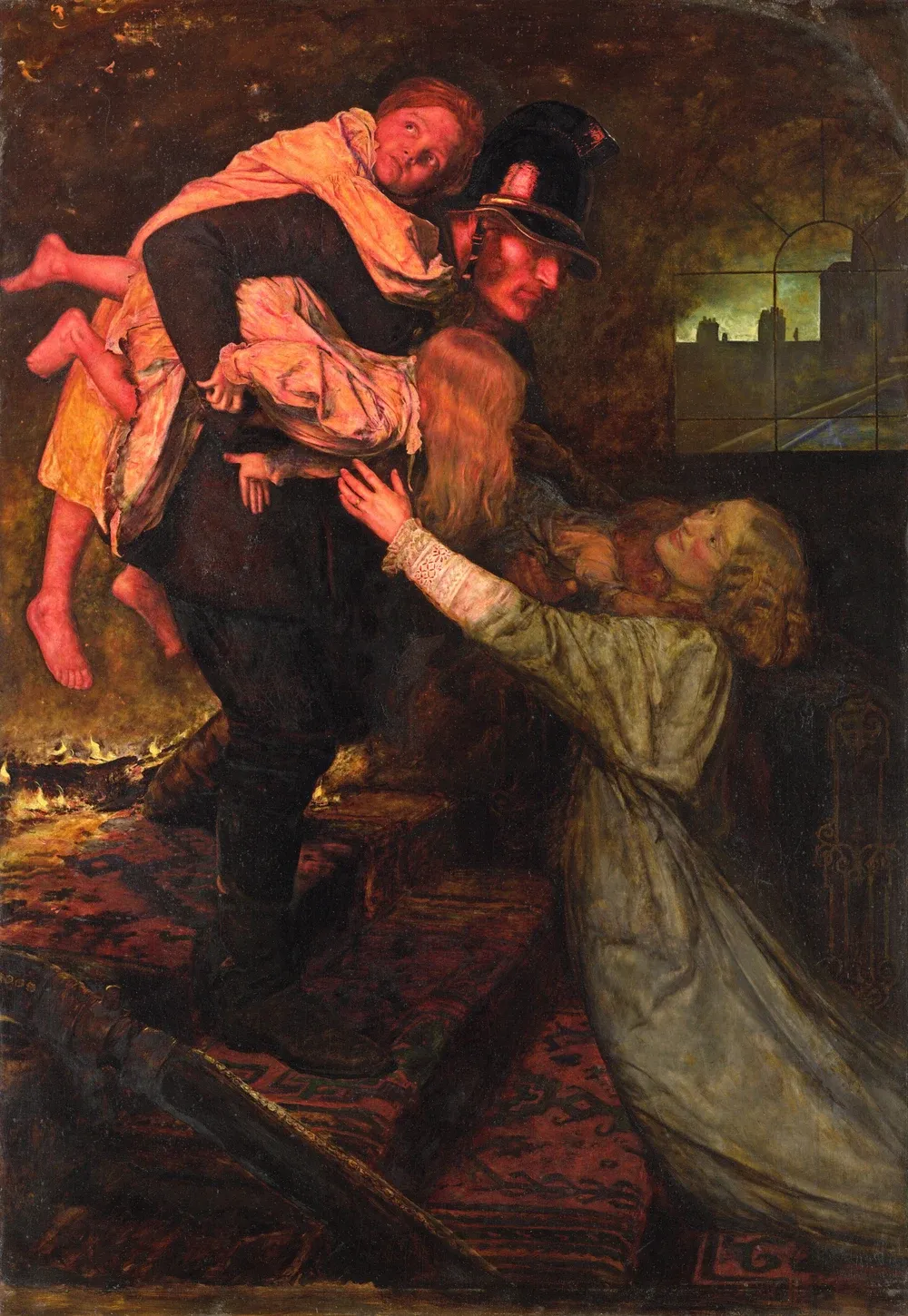
In The Rescue (1855), Millais wanted to honour the courage of firefighters. The urgency comes from both the children in danger and the person risking his life to save them.

If a reliable machine could enter a burning building and bring a child out, I would want it to. Protecting the rescuer matters too. The promise extends to dangerous inspections, disaster recovery and work in places people should never have to go.

That “if” carries a great deal. A convincing picture tells us nothing about a machine’s reliability. Who decides it is ready? Who can intervene? Who takes responsibility when it fails? Those are part of making the technology useful.

A firefighter brings children down from a burning building towards a woman reaching up to them.
The original The Rescue · 1855 Public domain · PD-Art

What would we need to know before trusting it with a life?

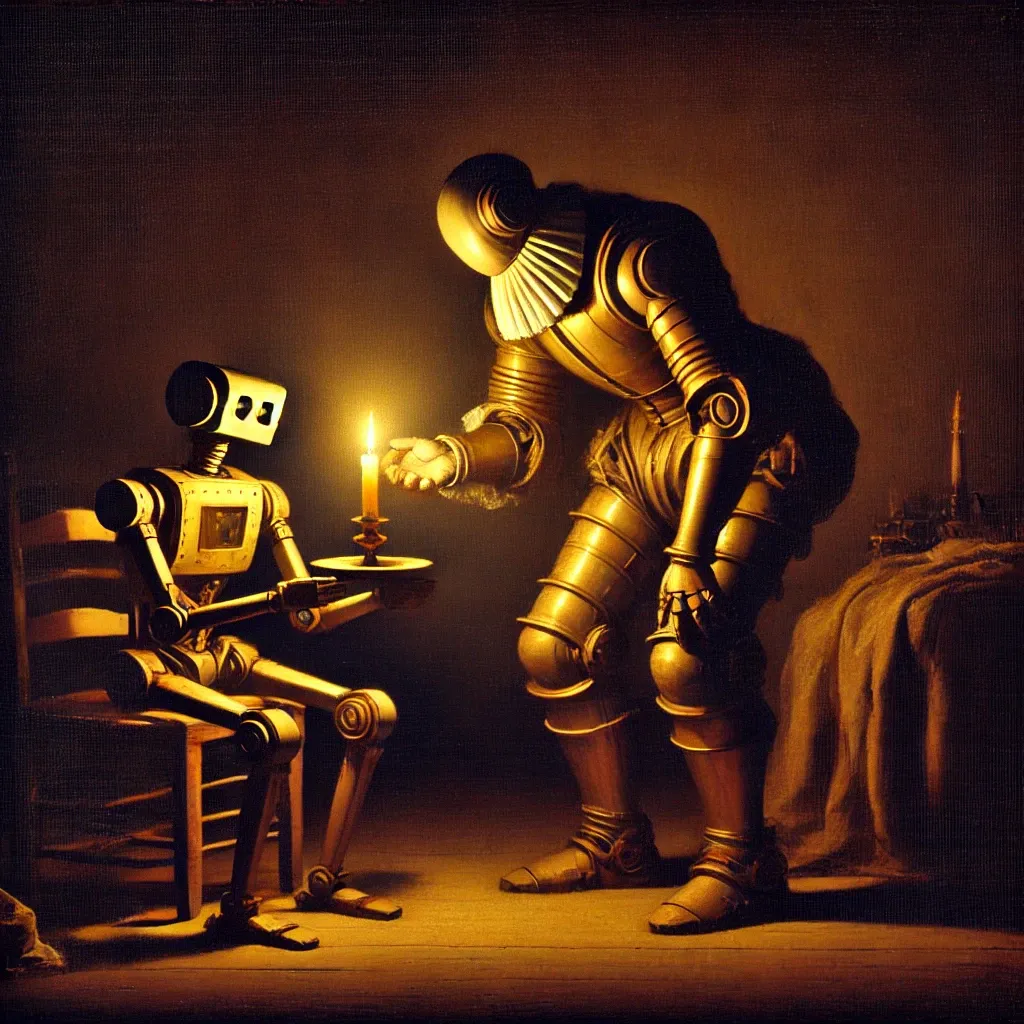
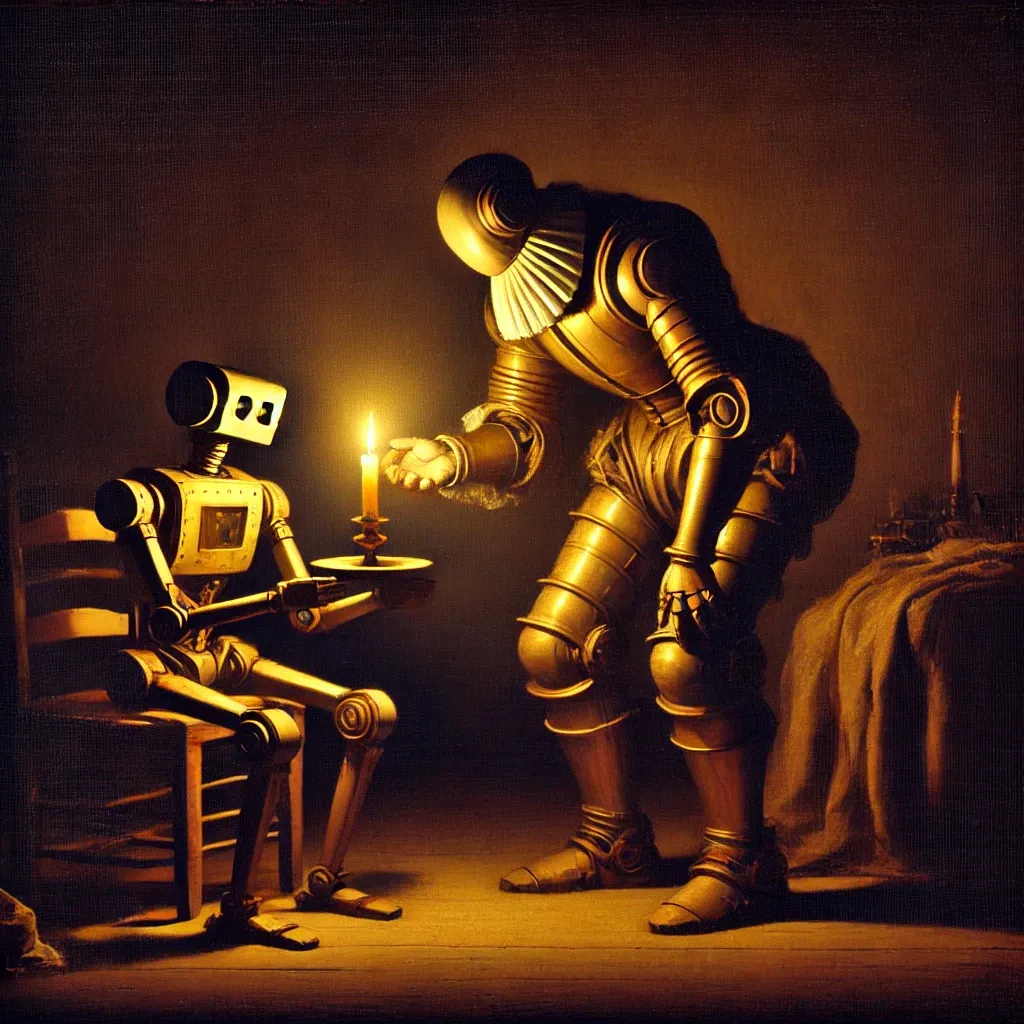
An older-looking robot bends over wood beside a smaller robot, their faces and hands illuminated by candlelight.
DALL·E 3 · 2024 Saint Joseph the Carpenter After Georges de La Tour
View artwork

04 / 08 — Learning by doing

Who teaches the next pair of hands?

Georges de La Tour’s Saint Joseph the Carpenter, painted around 1642–44, brings Joseph and the Christ Child together in candlelight. This is an intimate religious and family scene. The robot pair borrows its warmth, although a picture that moves us tells us nothing about what a machine feels.

Assistance can help people learn. In one study of 5,172 customer-support agents, an AI assistant increased issues resolved per hour by 15% on average, with gains varying across workers and evidence of learning. That is a useful example, not a universal promise.

I’d want to know whether the beginner can do more for themselves afterwards. Help with a difficult task can teach us something; having it done for us may leave us no wiser. We still need practice, mistakes and someone to ask why.

Can we design assistance that leaves us more capable?

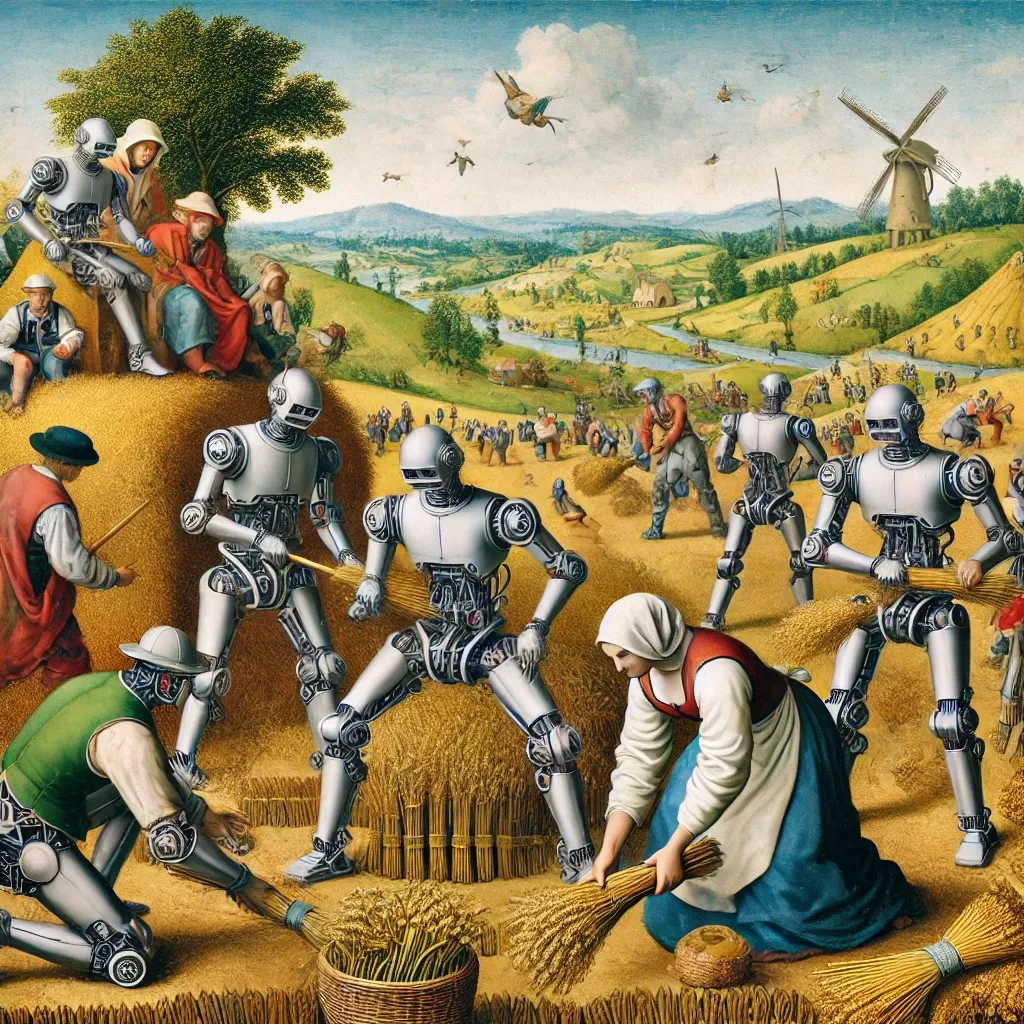
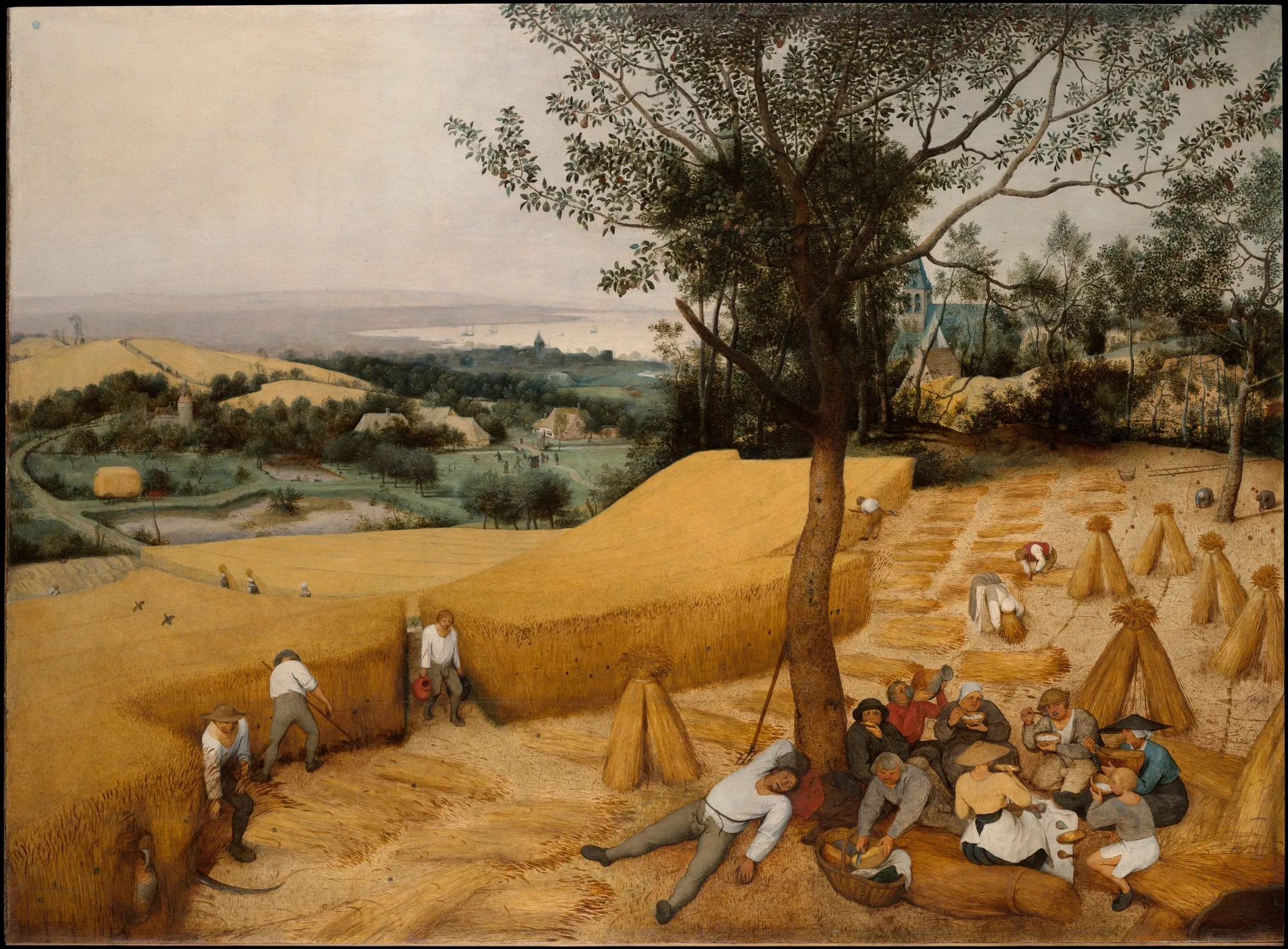
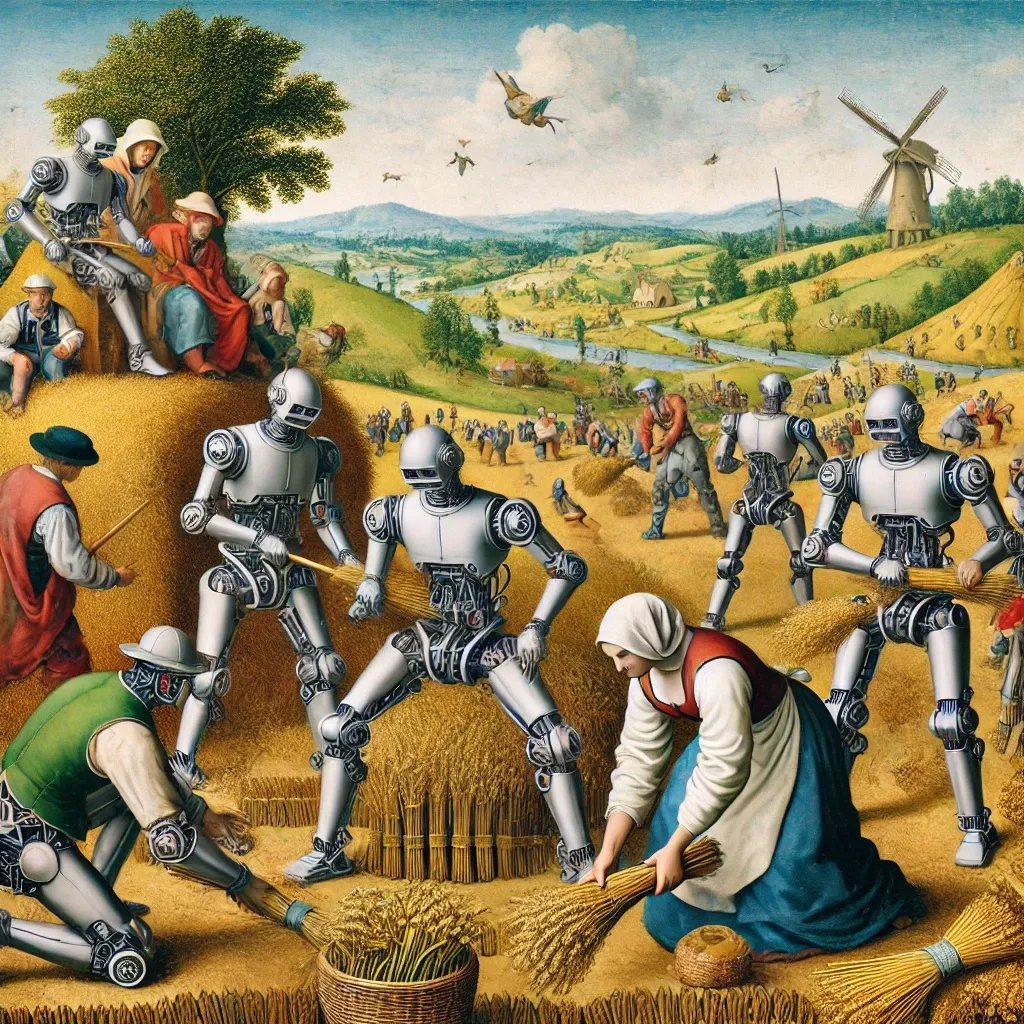
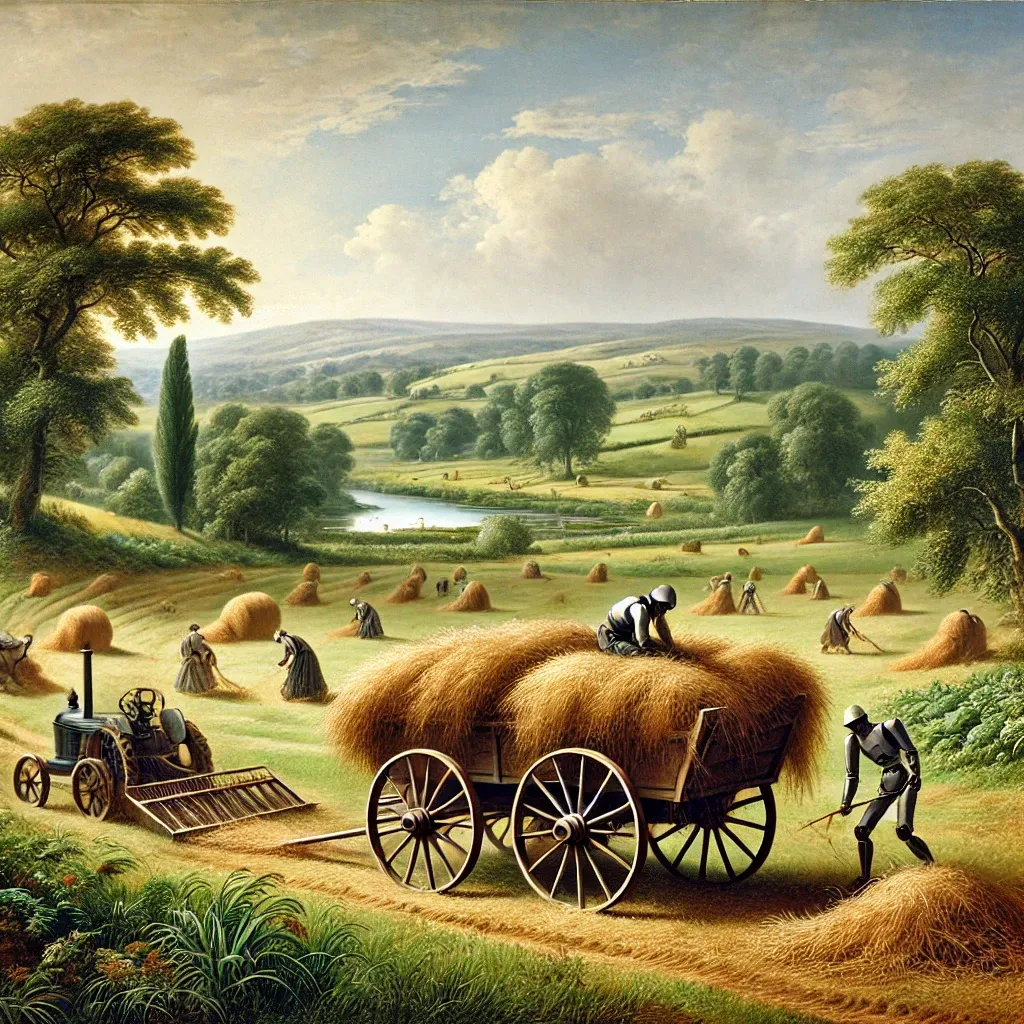
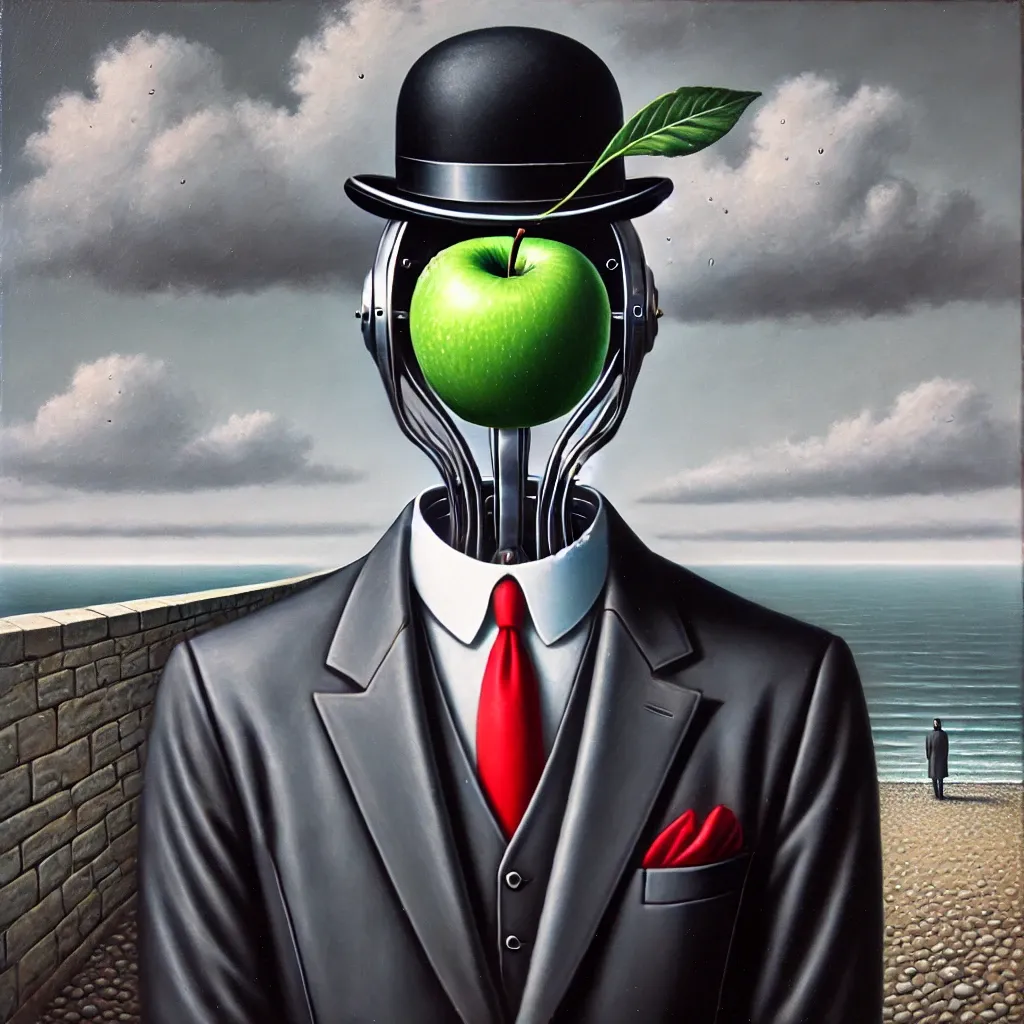
Robots harvest a golden field of wheat while others gather in the shade of a tree, with fields stretching into the distance.
DALL·E 3 · 2024 The Harvesters After Pieter Bruegel the Elder
View artwork

05 / 08 — Sharing the gains

A good harvest. For whom?

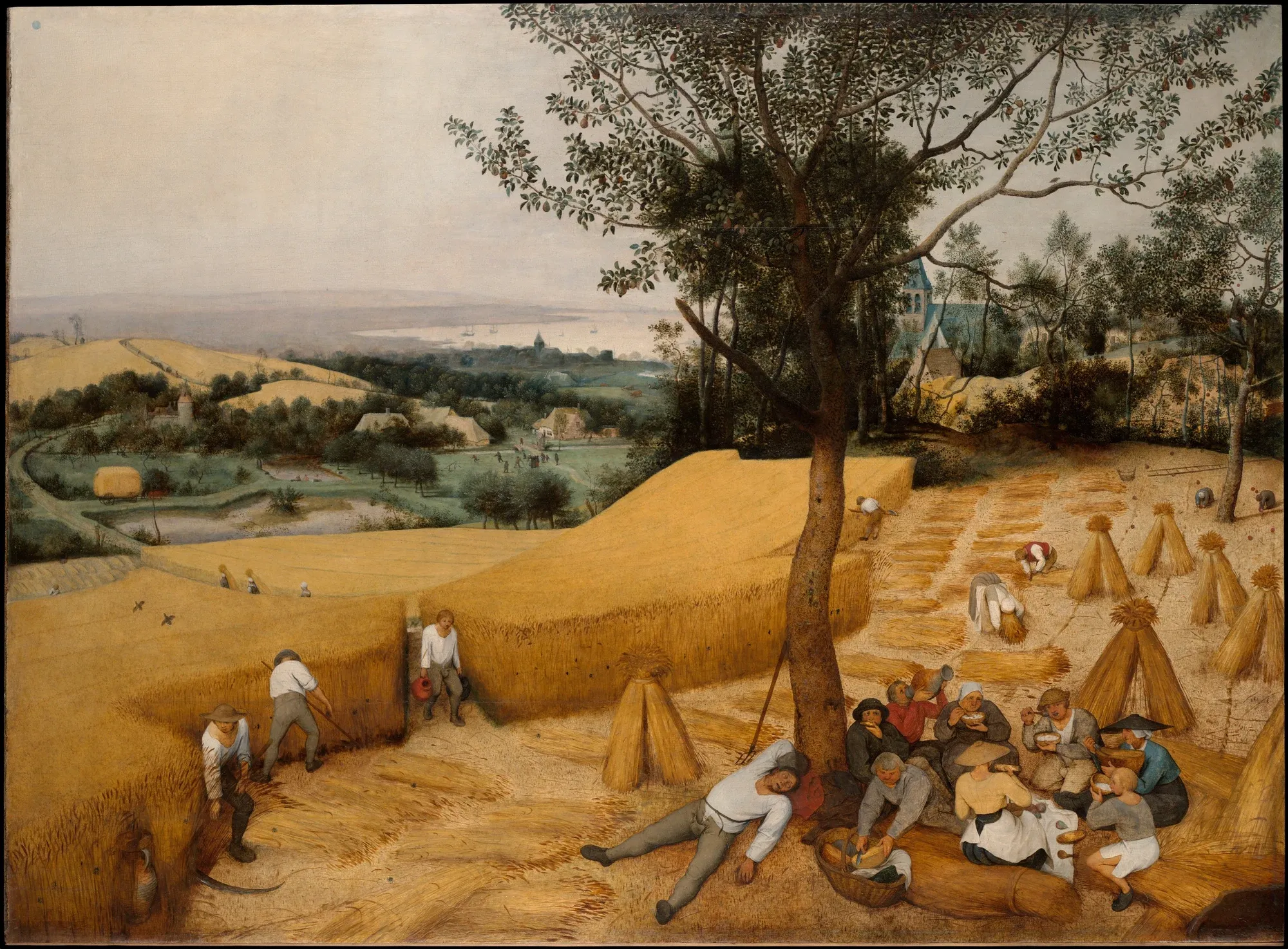
Bruegel’s The Harvesters (1565) has room for work, food, company and a nap. It is an idealised landscape, commissioned by a wealthy merchant, but its people are doing more than producing.

Automation could give us more of that room: shorter hours, better services, things that more people can afford. It could also concentrate income and power among the people who own the machines.

A bigger harvest doesn’t tell us who gets to eat. If a machine lets us produce the same amount in half the time, someone still has to decide what happens to the hours saved. Who owns it, who can negotiate and what rules we set will all matter.

Harvesters cut golden wheat while a group of people eat and rest beneath a tree, overlooking a broad summer landscape.
The original The Harvesters · 1565 CC0 · The Met Open Access

What would you spend a productivity gain on: more things, or more time?

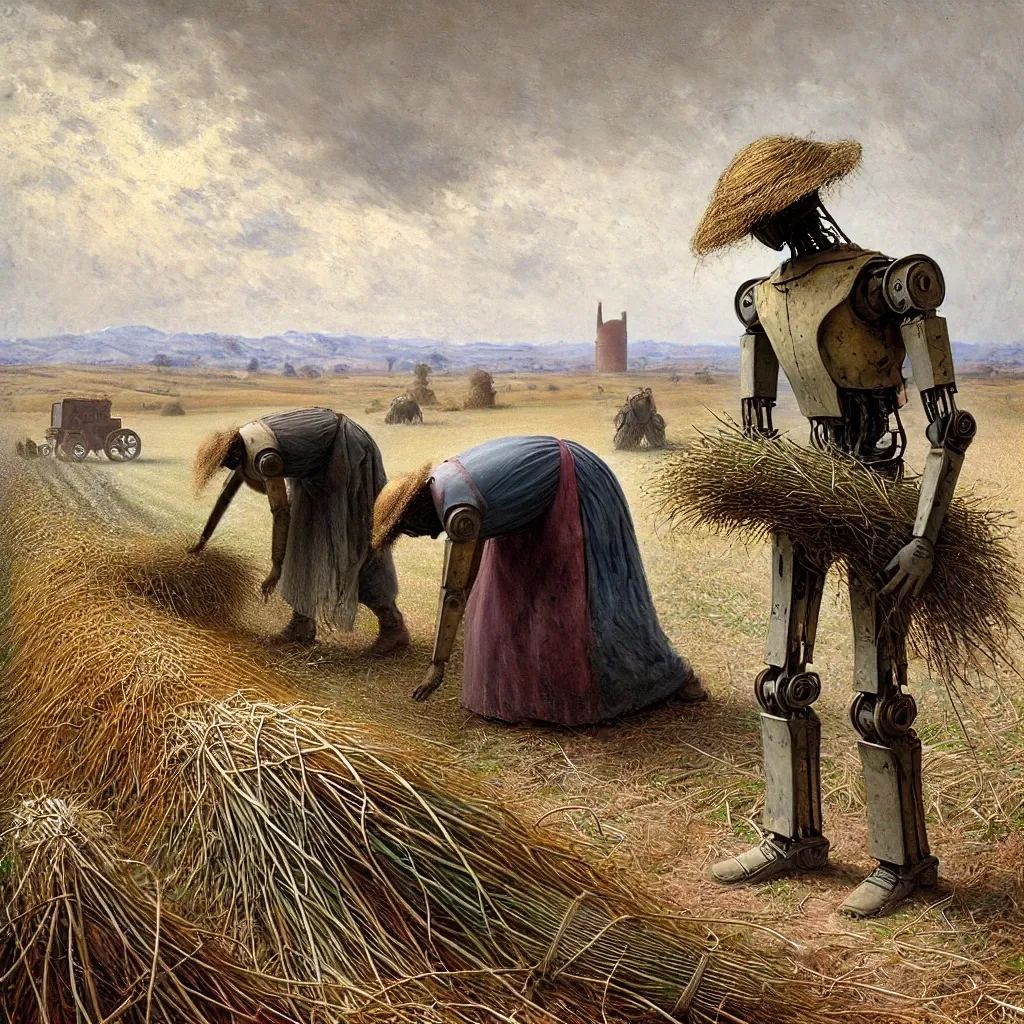
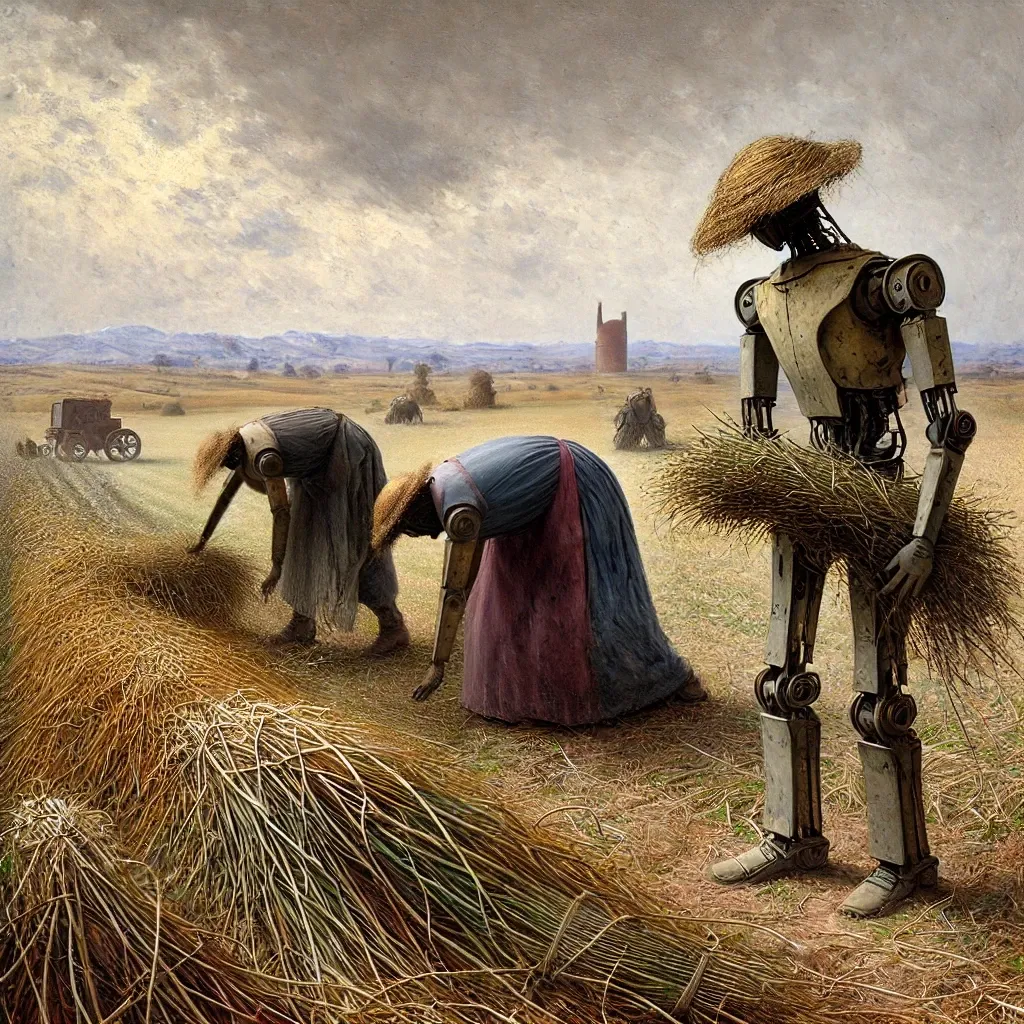
Three worn, rusty robots bend low to gather ears of grain from a harvested field, with a large harvest behind them.
From the archive · 2024 The Gleaners After Jean-François Millet
View artwork

05 / 08 — Sharing the gains

And who is left picking up the scraps?

Millet’s The Gleaners (1857) shifts our attention to three women gathering the ears of grain left behind after the harvest. The Musée d’Orsay describes the contrast between their repetitive labour and the abundance in the distance.

What troubles me is how close the abundance is. The women can see the harvest, but they’re still collecting what’s left. Producing more would be little comfort without a greater claim on it. The rusty robots inherit that problem.

We should also be careful with predictions. The ILO’s 2025 assessment finds that one in four workers worldwide is in an occupation with some exposure to generative AI. Exposure means tasks could change; it is not a forecast that a quarter of jobs will disappear.

What would a fair share look like?

From the working archive: this image was not in the final twelve-work poster set. It joins the story here in the digital exhibition.

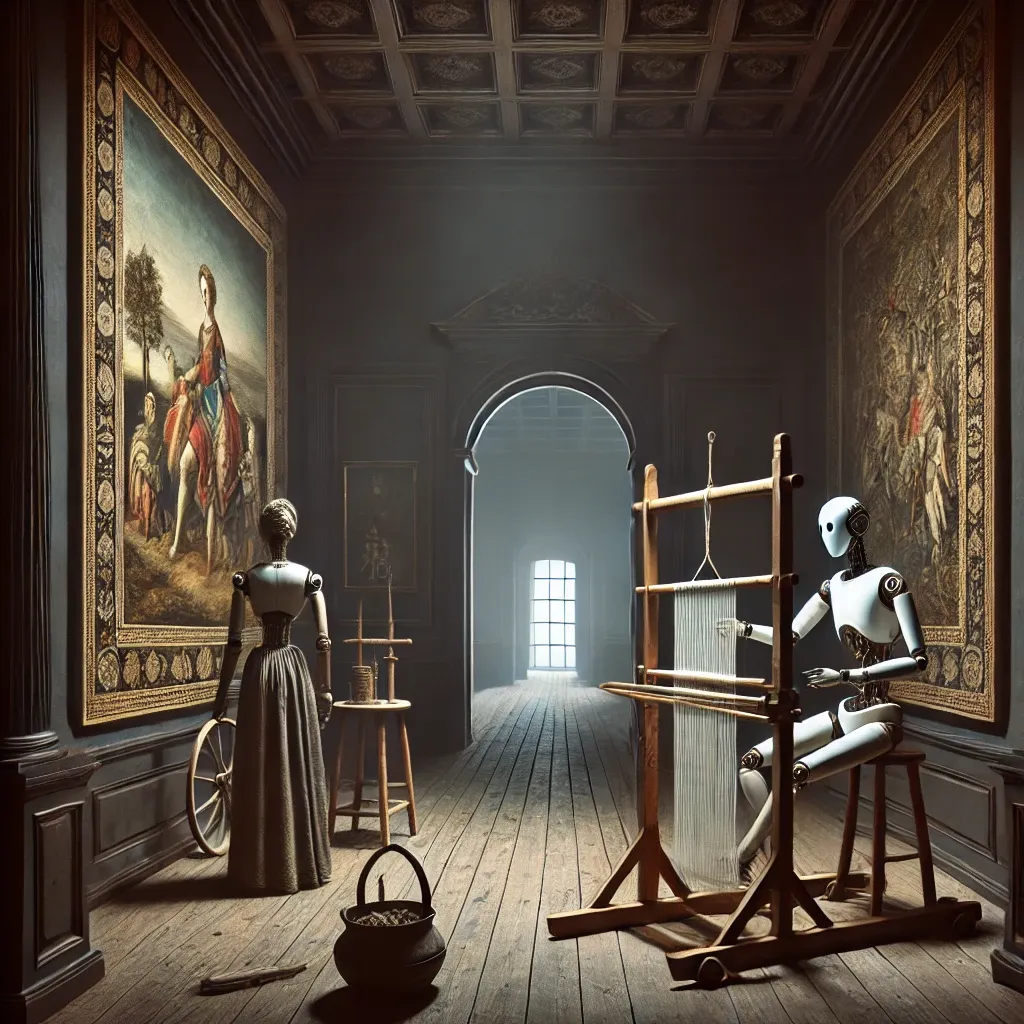
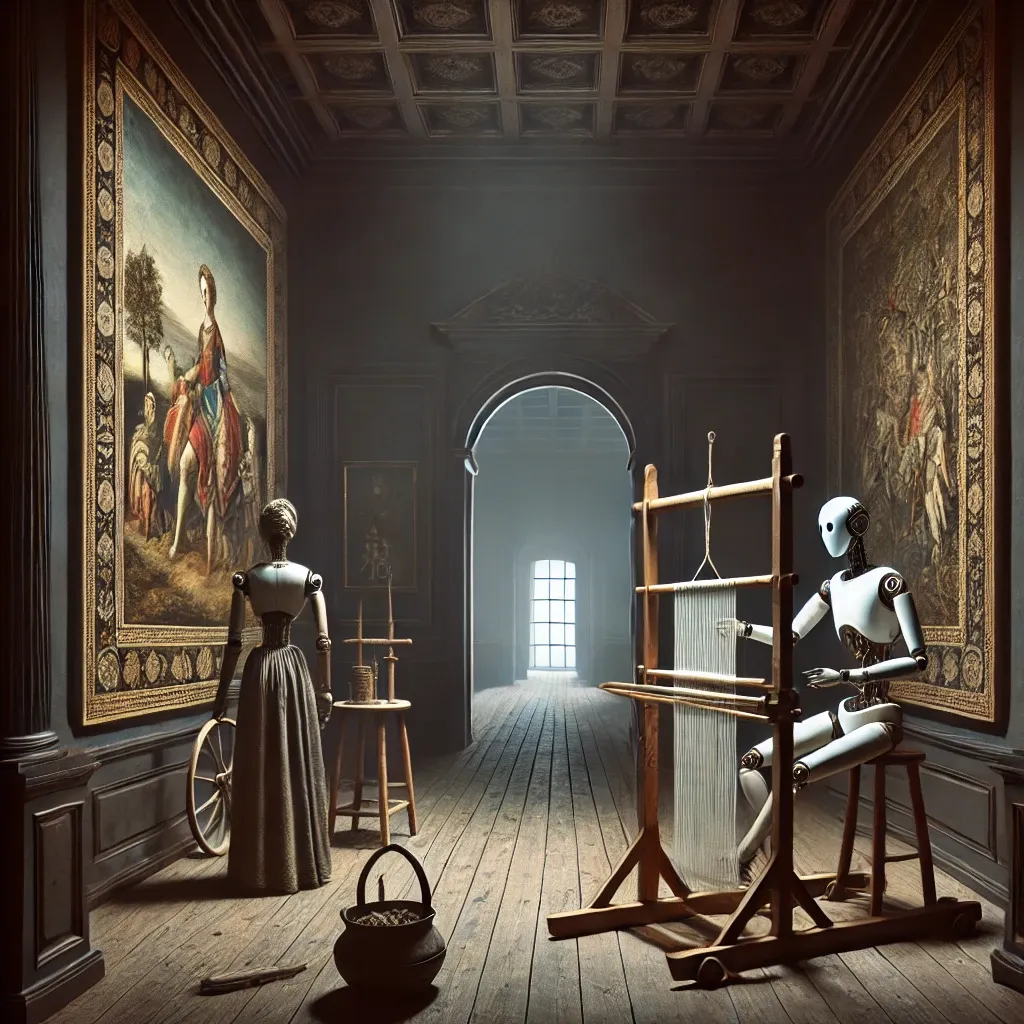
An almost empty, shadowy workshop opens onto a brighter room with two robot figures beside a loom.
DALL·E 3 · 2024 The Spinners After Diego Velázquez
View artwork

06 / 08 — Making & meaning

Who made this? And what makes it matter?

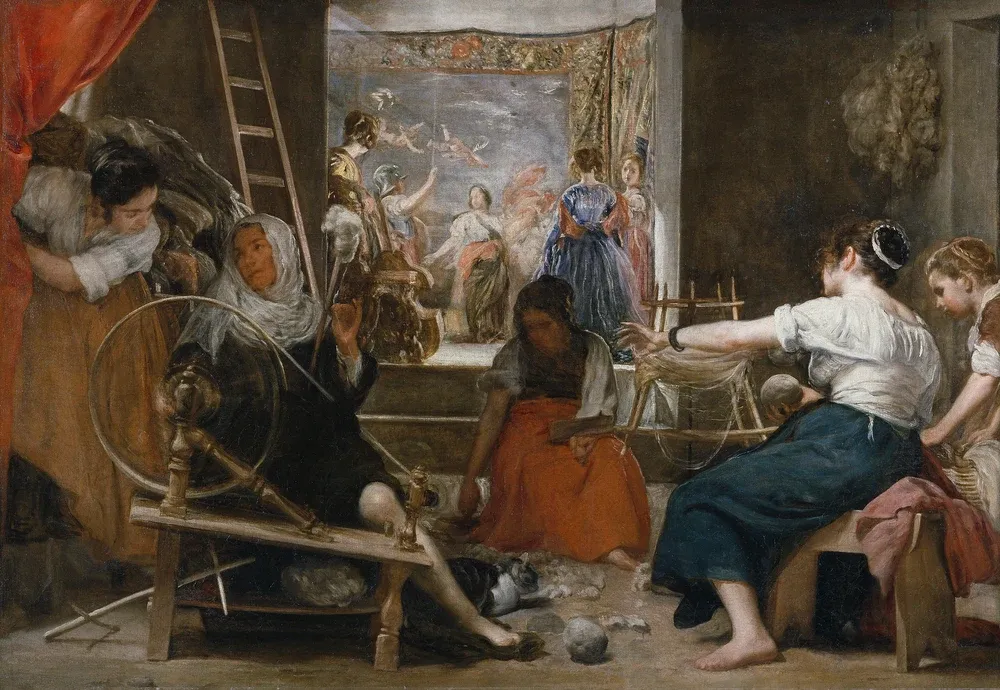
Velázquez’s The Spinners connects the labour of making cloth with the fable of Arachne and Athena, a contest over skill and authority. Its tapestry quotes a painting by Titian. Questions about imitation and artistic status have a long history.

The AI version gives us a much emptier room. I can enjoy the light and atmosphere while wondering where all that human activity has gone. It’s a pleasing image, but looking back at the original makes me less sure how much of its story has survived.

For this exhibition, AI models helped choose and describe paintings, generate images and write critiques. I steered them when they wandered off and chose what to keep. The tools opened up possibilities for me, but enjoying the results doesn’t settle questions about consent, credit or other people’s livelihoods.

Women spin and handle wool in a busy foreground workshop, with figures and a large tapestry in a raised room behind them.
The original The Spinners · 17th century · also known as Las Hilanderas Public domain · PD-Art

When making an image becomes easy, what do we choose to value?

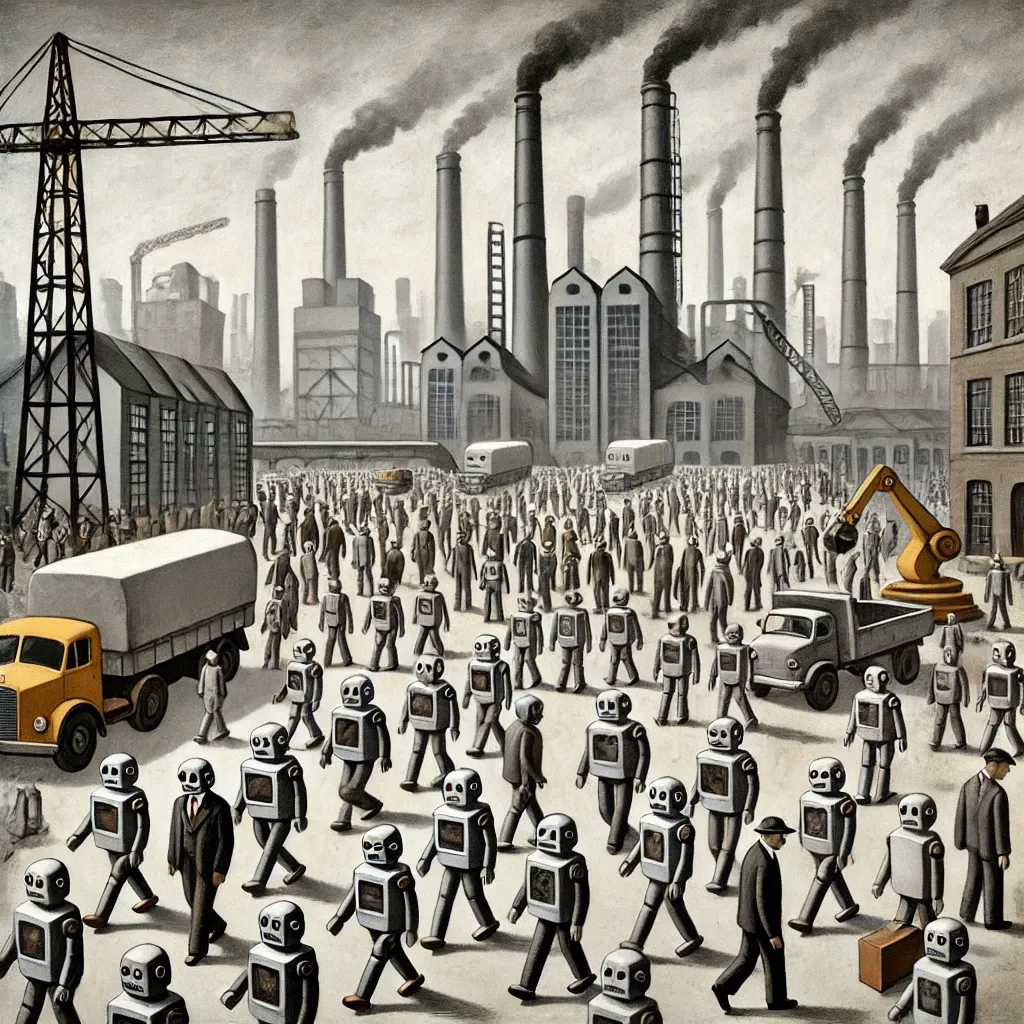
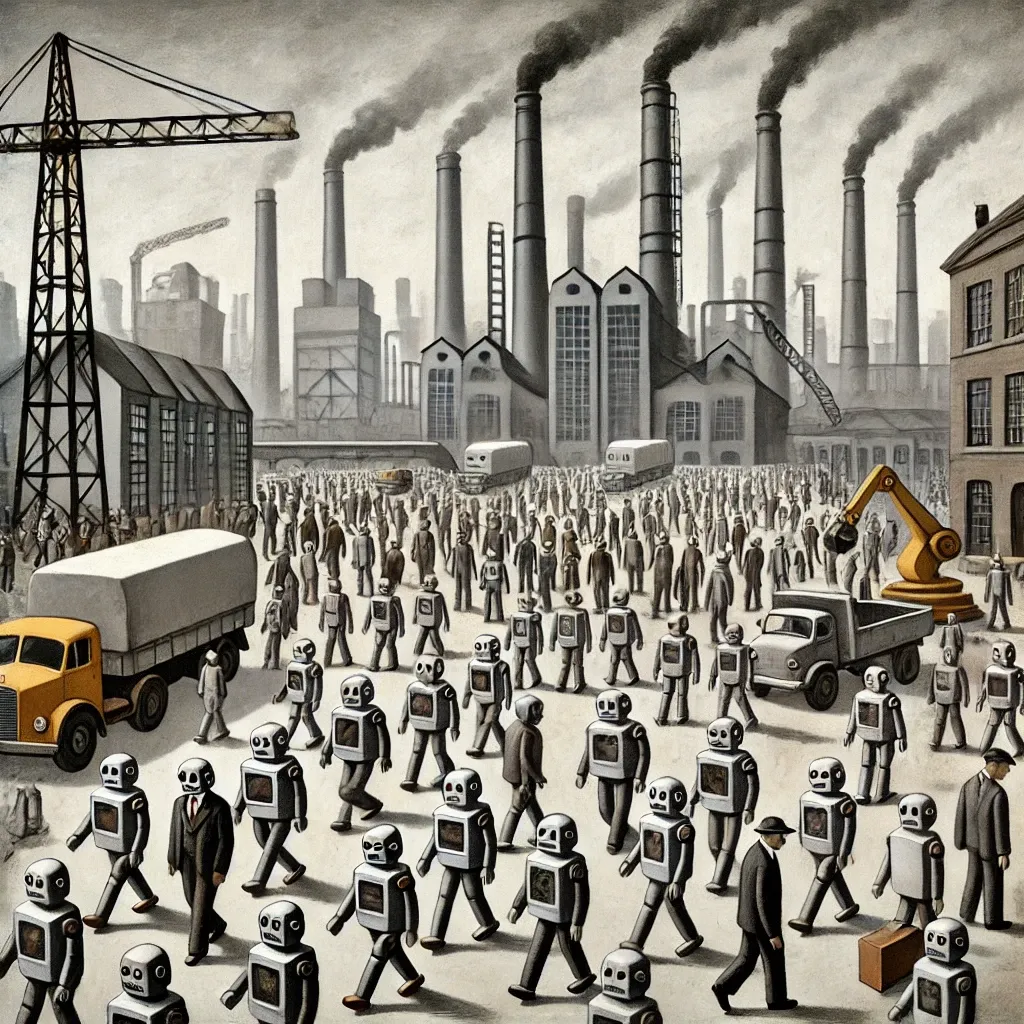
Crowds of small robot workers converge on a factory beneath smoking chimneys and a pale industrial sky.
DALL·E 3 · 2024 Going to Work After L. S. Lowry
View artwork

07 / 08 — A voice at work

What if the machine becomes the manager?

Lowry’s Going to Work (1943) shows people heading towards the Mather & Platt works in Manchester. In the reimagining, the crowd is mechanical. Yet people needn’t be replaced by robots for their working lives to become more tightly controlled.

Software can allocate shifts, set targets and assess performance. There are good reasons to want help organising all that. An OECD survey of more than 6,000 firms records managers’ perceived benefits alongside concerns about accountability, explainability and workers’ health.

But imagine being given a shift you can’t work, then finding there’s nobody you can ask to change it. I’d want the people doing the work to help shape the system, and to have someone with the authority to put things right when it makes a mistake.

Who can say no? Who can ask for a decision to be changed?

Harvesters cut golden wheat while a group of people eat and rest beneath a tree, overlooking a broad summer landscape.
The original The Harvesters Pieter Bruegel the Elder
View artwork

08 / 08 — Our future

The future is still ours to choose.

Let’s return to Bruegel, and put the people back. I’d like all this ingenuity to give us more time to spend as they do here: eating together and resting under a tree.

I don’t think we have to accept the future that a company’s sales pitch or a government’s announcement presents as inevitable. We can ask what a technology is for, who benefits and what we are prepared to give up.

We can choose what we buy and which services we use, although money and access make those choices unequal. We can organise with colleagues, support each other, speak up and turn up to vote. Collective choices can change the options available to everyone.

That’s why I want us to protect our rights to speak, organise, vote and have a voice at work. They belong to a much larger human-rights tradition, and give us ways to challenge decisions and change course. To me, they matter more than AI.

What would you like the machines to do—and what would you like more time for?

Bring the conversation to your event

Beyond the screen

A conversation
that travels.

I made this travelling exhibition to start conversations about work, creativity and the choices we make around AI. First shown at WOMAD UK in 2024, the posters have since appeared at several events in Spain, including the Human Rights and AI congress in Valencia.

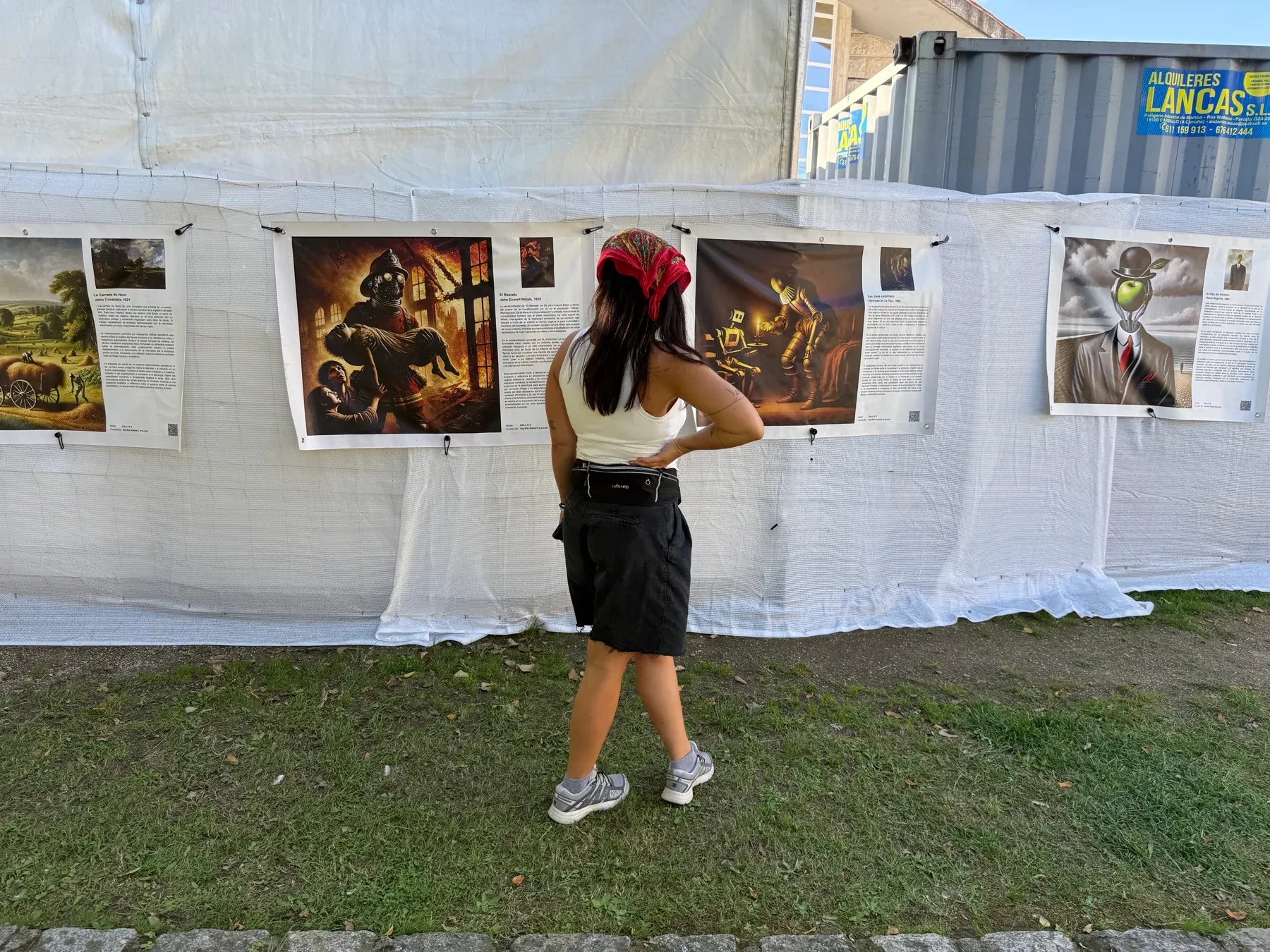
A festival visitor reading the exhibition posters hung along the outside of a white marquee.
Revenidas, Galicia · September 2026
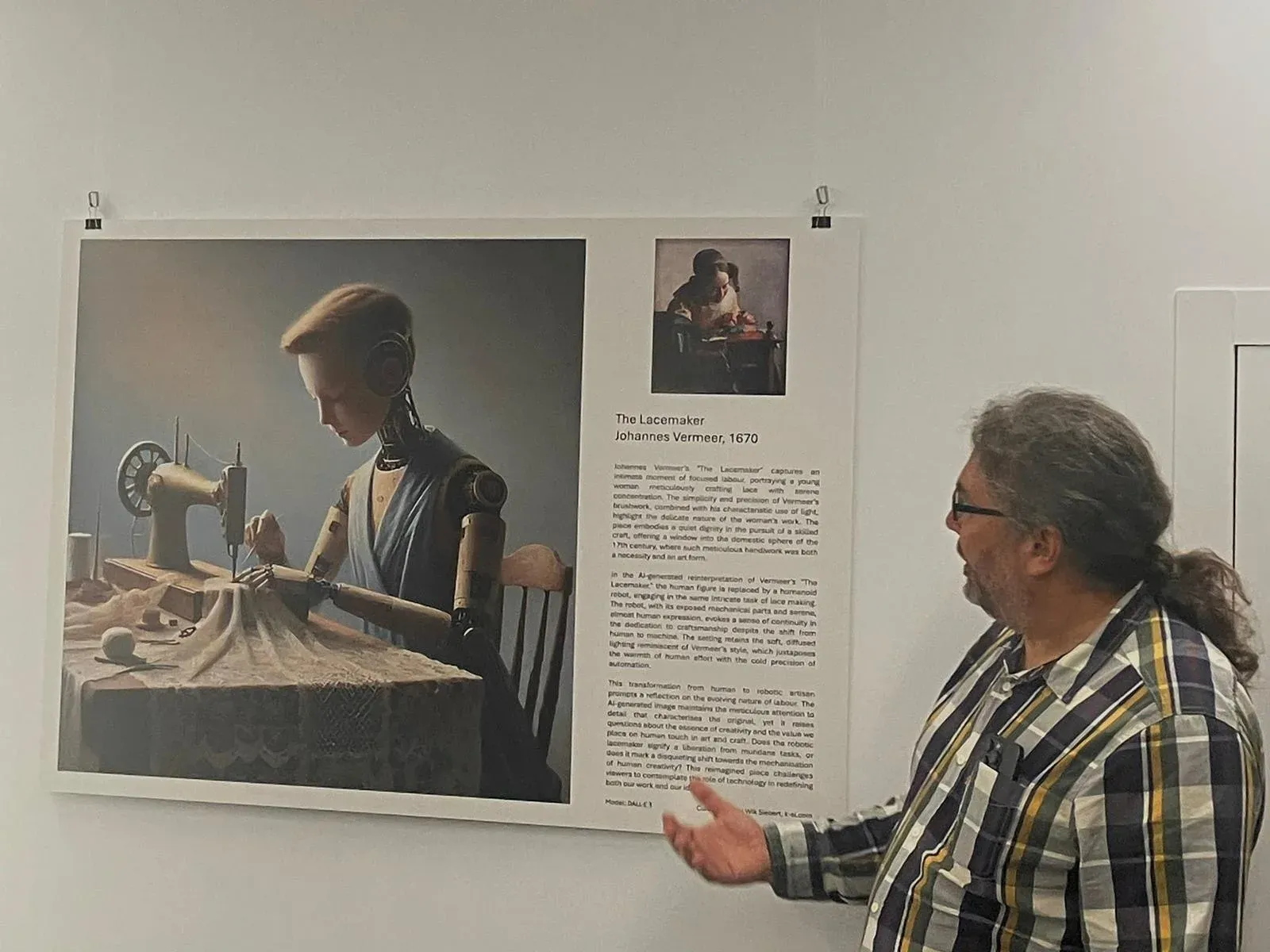
Kaj discussing the robot reimagining of The Lacemaker beside its printed exhibition poster.
Talking through The Lacemaker · Valencia, October 2025
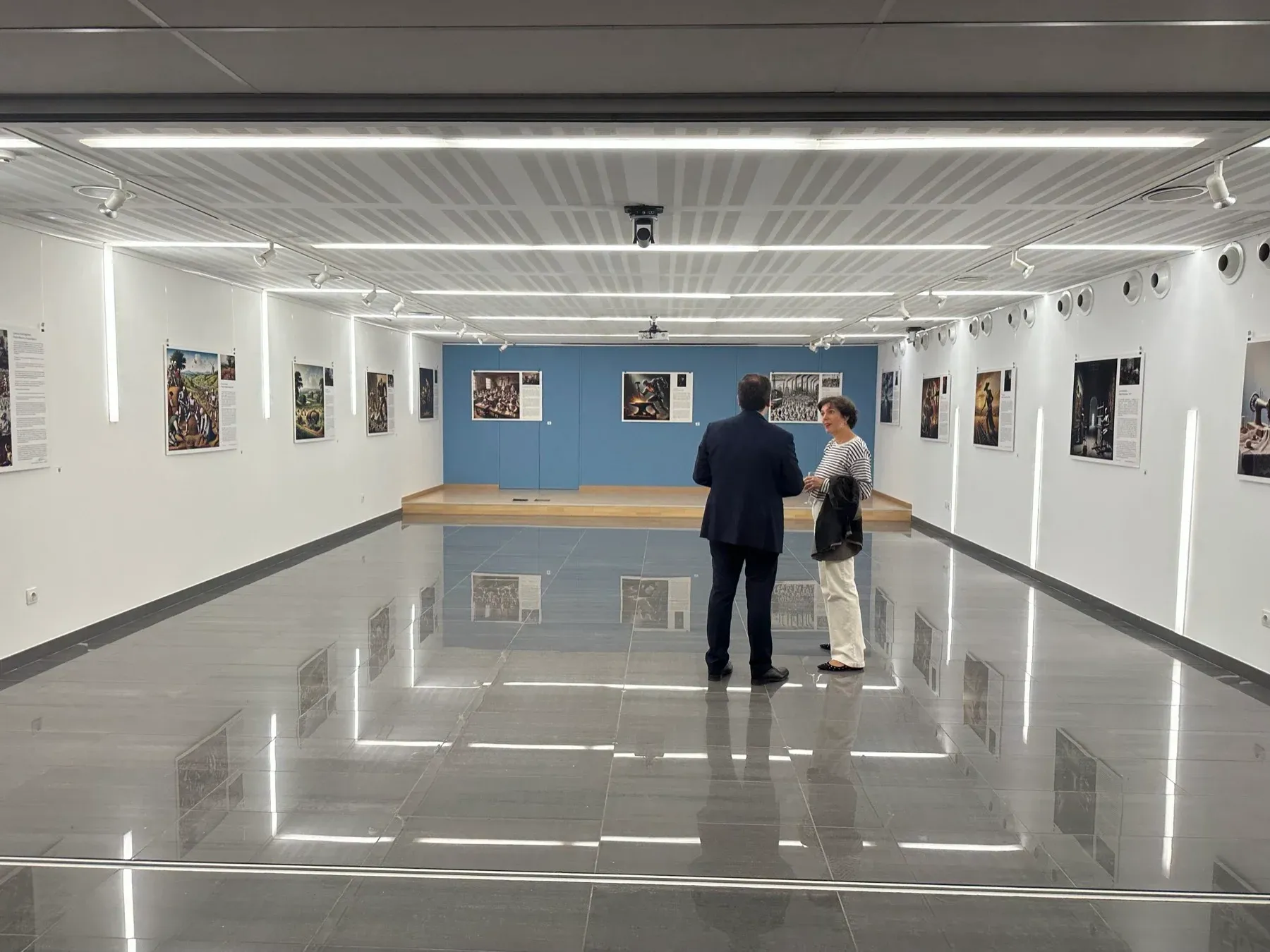
Visitors in a bright gallery with the exhibition posters arranged around the walls.
Human Rights and AI congress · Valencia, October 2025

Keep the conversation going

Interested in exhibiting?

If you’d like to bring Labour Reimagined to your event or venue, I’d love to hear from you. Tell me a little about the setting, where it is and when you have in mind.

Get in touch

Behind the pictures

An experiment.
And an invitation.

I began with Joanna Maciejewska’s observation about wanting machines to do the chores so that we can make art. For this exhibition, I let AI do as much of the work as possible, then looked at what it made. Even the poster critiques came from AI: one model commenting on what another had made.

I have no doubt that AI art can be pleasing, but what does it convey? These pictures give us something to look at while we work through that question—and what we want from the machines more generally. I hope you’ll find things here to disagree with as well as enjoy.

Read my original exhibition introduction

Kaj Siebert

How the images were made

The images were generated with DALL·E 3 in 2024. AI models helped choose and describe the reference works and write the original poster critiques; I supervised, steered and curated their output. The story on this page revisits the works using the linked collection records and research.

The images are speculative interpretations. They do not establish what a robot can do, what it experiences, or which works were used to train a model. Credit for the original ideas and paintings belongs to the artists named throughout.

Original paintings & image credits

Five historical reproductions are included where the source identifies public-domain status or an open licence. Images have been proportionally resized and converted to WebP; none has been cropped. Rights records checked 22 October 2026.

The Met makes its public-domain collection images available under CC0. The other linked records mark faithful reproductions of public-domain paintings as PD-Art / Public Domain Mark. These are distinct rights statements.

Other historical originals are linked in the story, without reproducing them here, because reuse terms for the available source files have not been verified.

Research & further reading

Collection records are linked beside the relevant paintings. For the wider discussion: